

Potential sellers are heading into the 2026 spring market with high expectations and a relatively grounded view of what it takes to get there. According to the Realtor.com® 2026 Spring Seller Survey conducted by the Research and Insights team, 83% of those planning to sell in the next 12 months expect to receive their asking price or more, three-quarters believe now is a good time to sell, and most anticipate a sale within four months. Yet beneath that confidence lies a more nuanced picture: Concession expectations are rising, and sellers’ reads on market conditions vary sharply by region. The spring window is open, but the seller experience depends heavily on where a home is listed and how it’s priced.
Sellers enter spring with high—but evolving—expectations
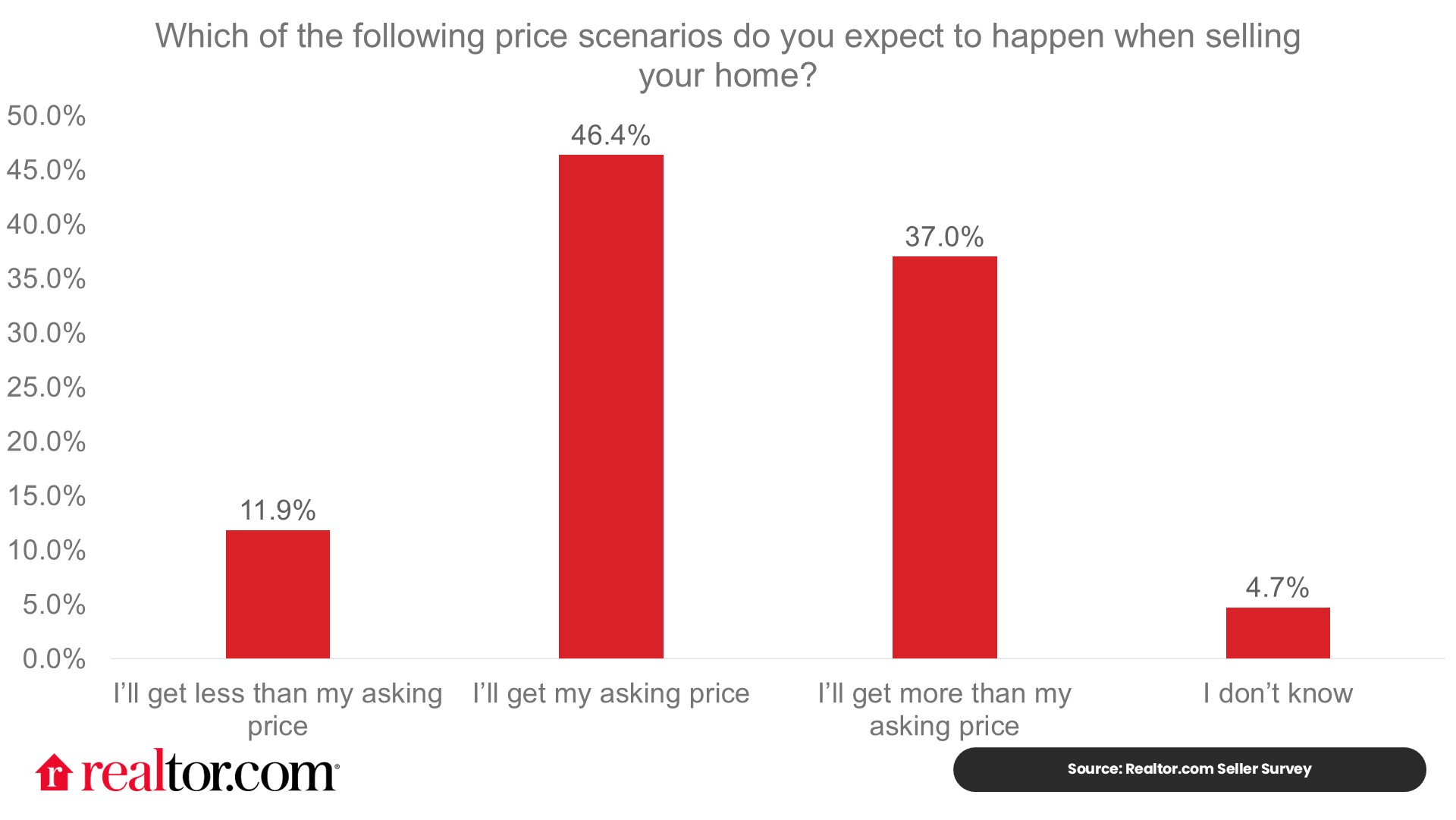
Price optimism remains the defining feature of the 2026 seller outlook. Nearly half of potential sellers (46%) expect to receive their asking price, 37% expect to exceed it, and just 12% anticipate a below-ask result.
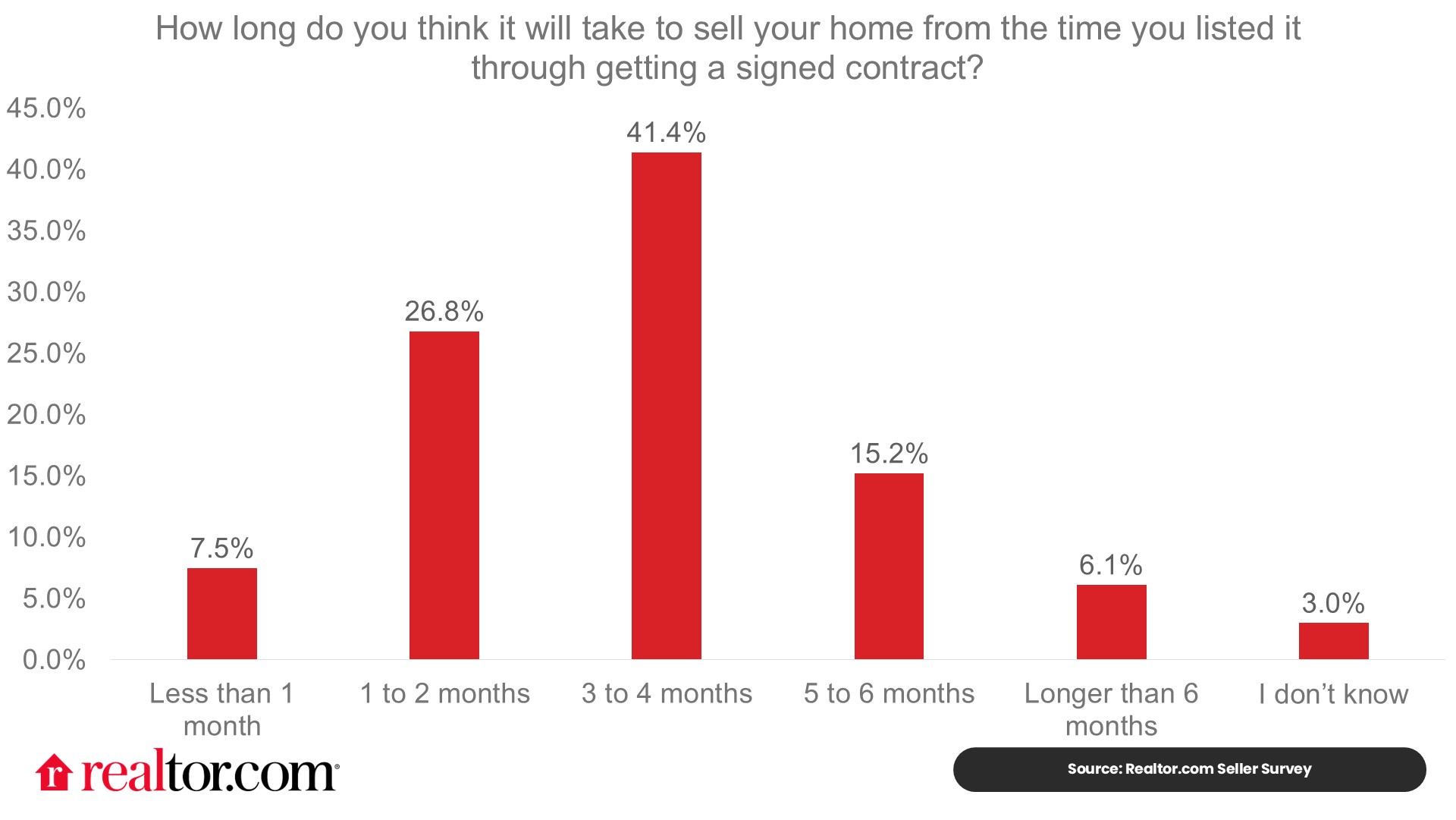
Timing expectations are also fairly confident. Three-quarters of potential sellers expect their home to sell within four months, including 27% who anticipate a sale within one to two months. For context, the typical home currently spends 57 days on the market nationally, according to the Realtor.com March 2026 Monthly Housing Report, and time on the market tends to edge even lower, seasonally, as the Best Week To Sell arrives, meaning most sellers’ timelines are ambitious but not unreasonable, provided pricing is right.
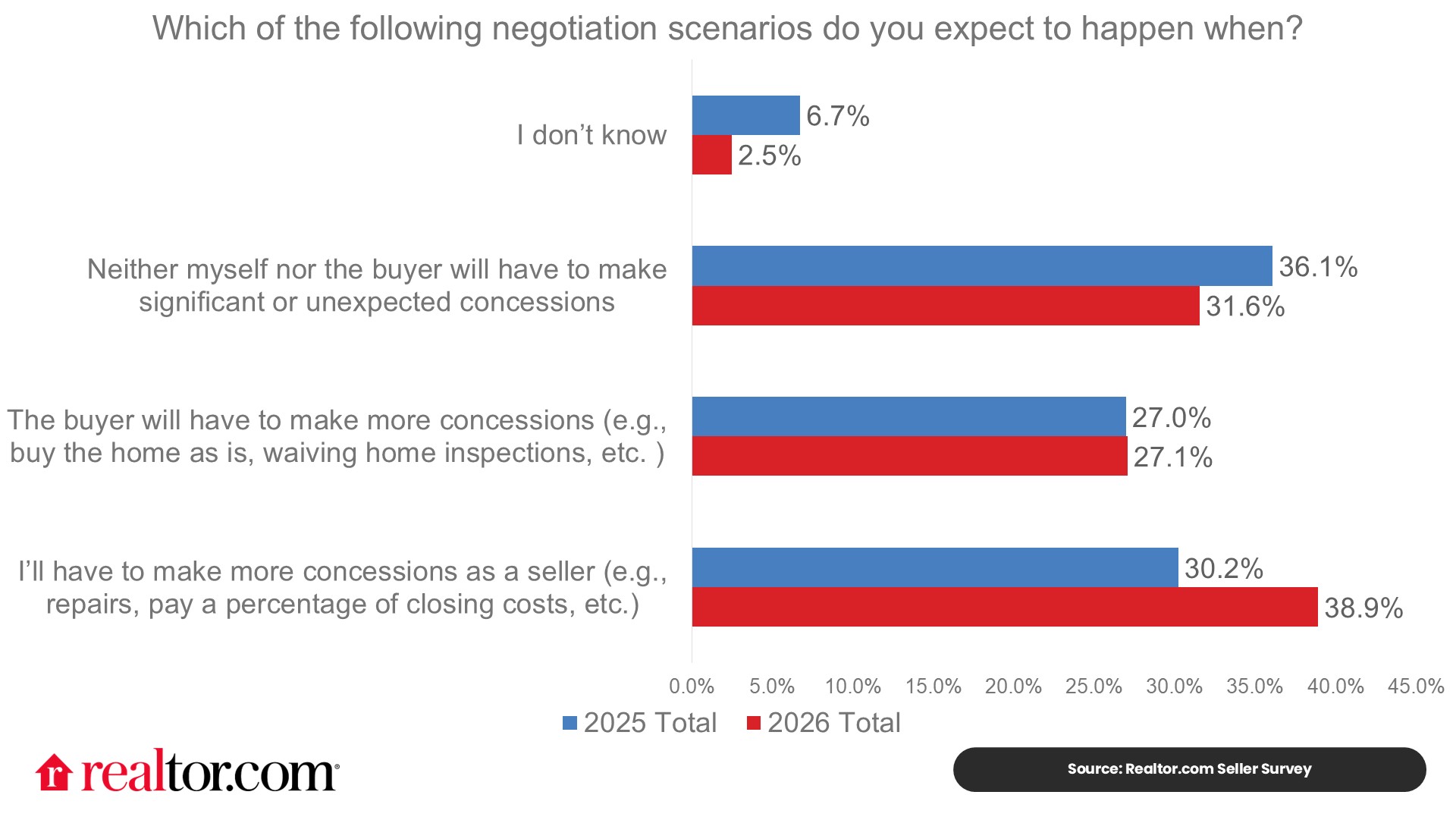
Where expectations are shifting is on concessions. In 2026, 39% of potential sellers anticipate having to make concessions, up meaningfully from 30% in 2025. That 9-point jump is one of the more telling signals that, though sellers are still optimistic, they’re beginning to price in the give-and-take that a transitioning market requires.
What’s driving sellers to list
Profit potential and lifestyle change remain the dominant motivations for listing, but the balance between them is shifting. Forty-one percent of potential sellers cite the desire to make a profit, up from 36% in 2025, while an equal share are seeking a different neighborhood or community, down from 46% last year. The need for more space rounds out the top three at 39%.
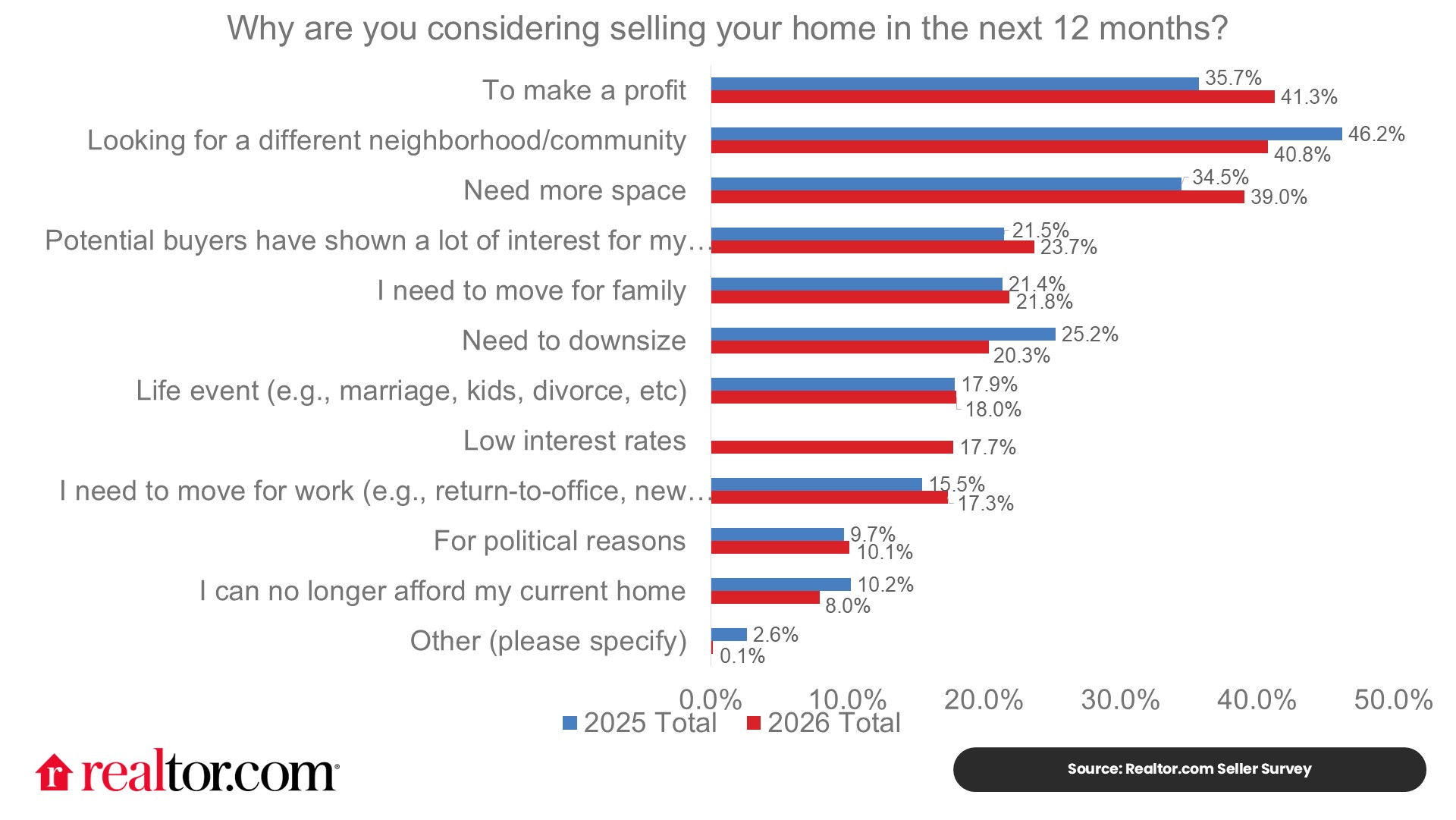
The year-over-year decline in neighborhood-driven moves is worth noting. It may signal that discretionary, lifestyle-motivated sellers, those with flexibility on timing, are increasingly sitting out, while equity-motivated sellers with a financial rationale to move are stepping in. Fewer sellers also cited downsizing as a motivation (20% vs. 25% in 2025), consistent with a market where trade-up moves and profit realization are top of mind.
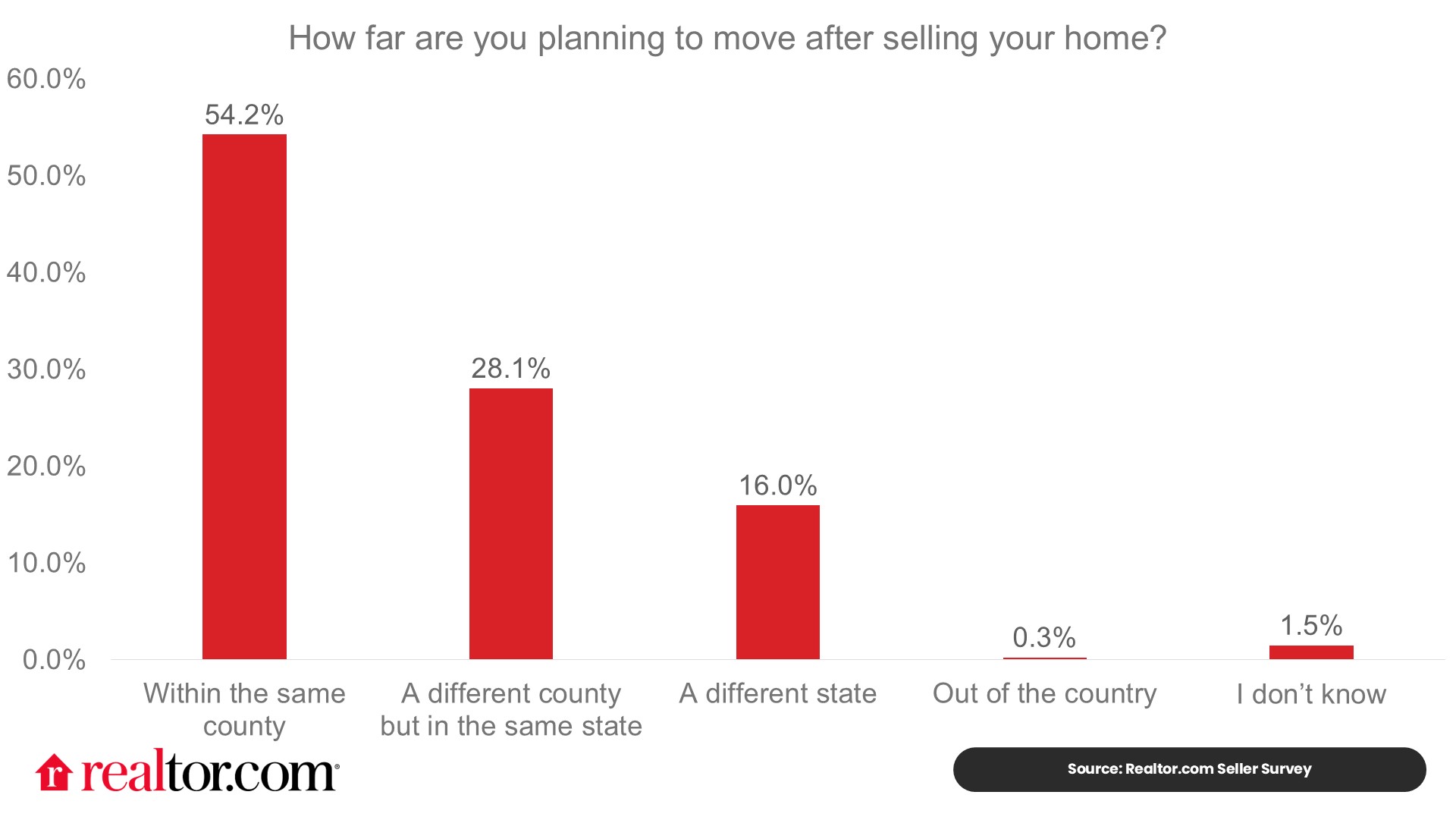
Geographically, most potential sellers aren’t going far, a departure from recent trends that have shown out-of-market shoppers were dominant among the country’s large markets. Eight in 10 potential sellers plan to stay within their current state, and more than half are moving within the same county. Local market dynamics and community ties remain central to sellers’ decision-making, which also means their assessment of local conditions shapes how aggressively they approach the listing process.
A market in transition—and the window to act
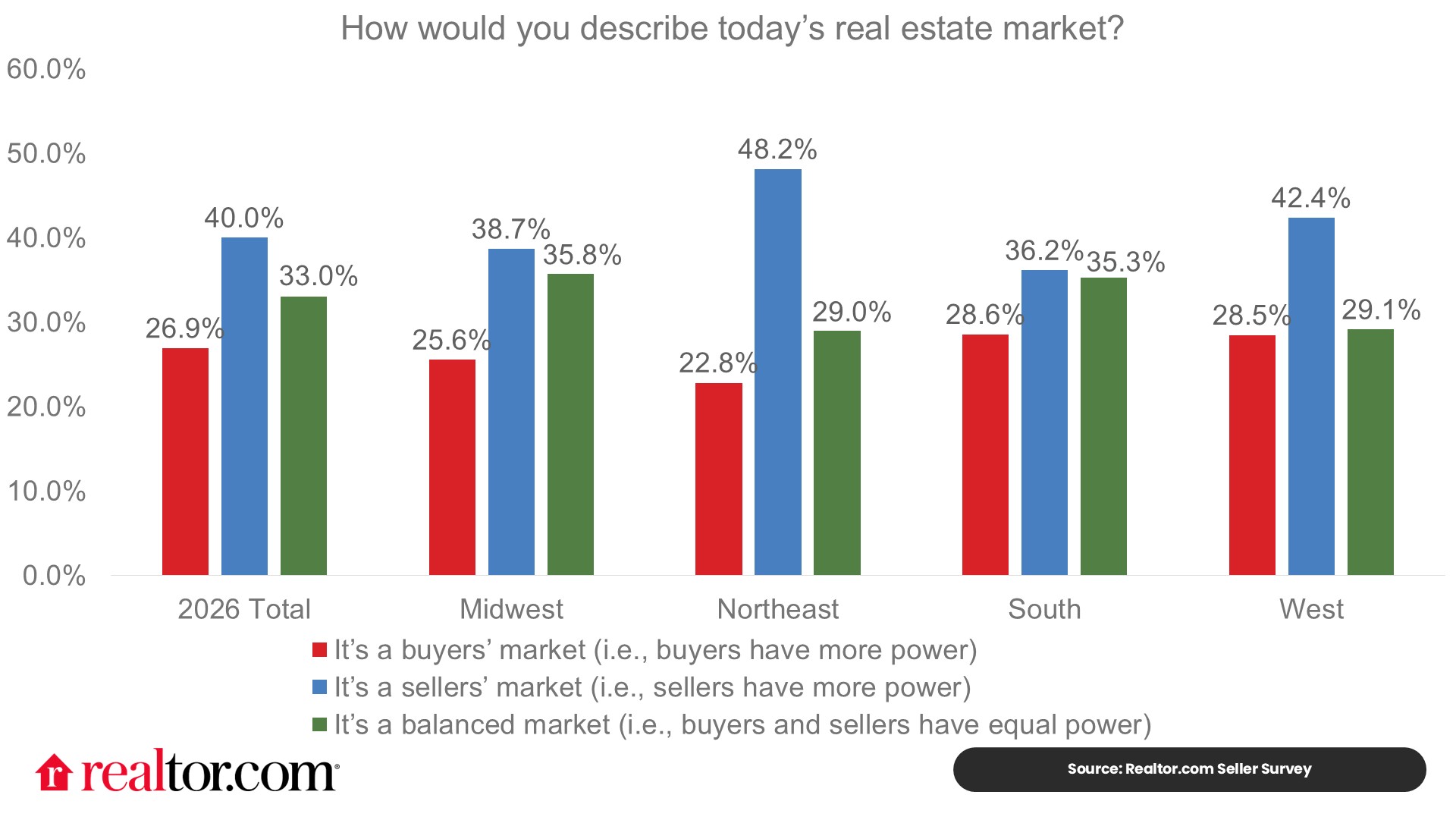
Seller sentiment reflects the broader housing landscape: 40% describe the current market as a seller’s market, 33% see it as balanced, and 27% view it as favoring buyers. Regionally, sellers in the South and West leaned more toward a buyer’s market view than other regions, consistent with rising inventory in those areas. Meanwhile, nearly half of potential sellers in the Northeast saw conditions as favoring sellers, a reflection of tight inventory and strong competition there. Importantly, however, across all geographic regions, more respondents view a seller’s market than any other classification, perhaps offering insight into motivation to sell.
That regional divide is visible in the Realtor.com Market Clock data as well. Just 26% of the nation’s 50 largest metros are currently classified as seller’s markets, concentrated largely in the Midwest and Northeast. All eight buyer’s markets fall in the South or West, including Austin, Tampa, Orlando, Jacksonville, and Miami.
For potential sellers, their metro’s position on the Market Clock directly shapes the calculus on pricing, concessions, and timing. Sellers in peak seller’s markets—Hartford, Chicago, Indianapolis—can reasonably expect strong demand with limited need for price flexibility. Those in buyer’s markets, particularly across Florida and Texas, would be well-served to lean into the spring window early and price competitively from the start. Homes that linger in these markets risk compounding their disadvantage: Extended days on the market tend to invite buyer skepticism and further price reductions.
The spring window—and what happens if it closes
Timing matters in any market, but especially in a transitional one. According to the Realtor.com 2026 Best Time To Sell Report, the week of April 12–18 represents a historically favorable listing window: Homes listed that week attract 16.7% more views than a typical week, sell roughly nine days faster, and carry median listing prices approximately $26,000 above January levels nationally.
That window won’t stay open indefinitely. When asked what they would do if their home didn’t sell within their desired timeline, sellers split nearly three ways: 35% would reduce the price, 34% would wait out the market, and 29% would pull the listing entirely.
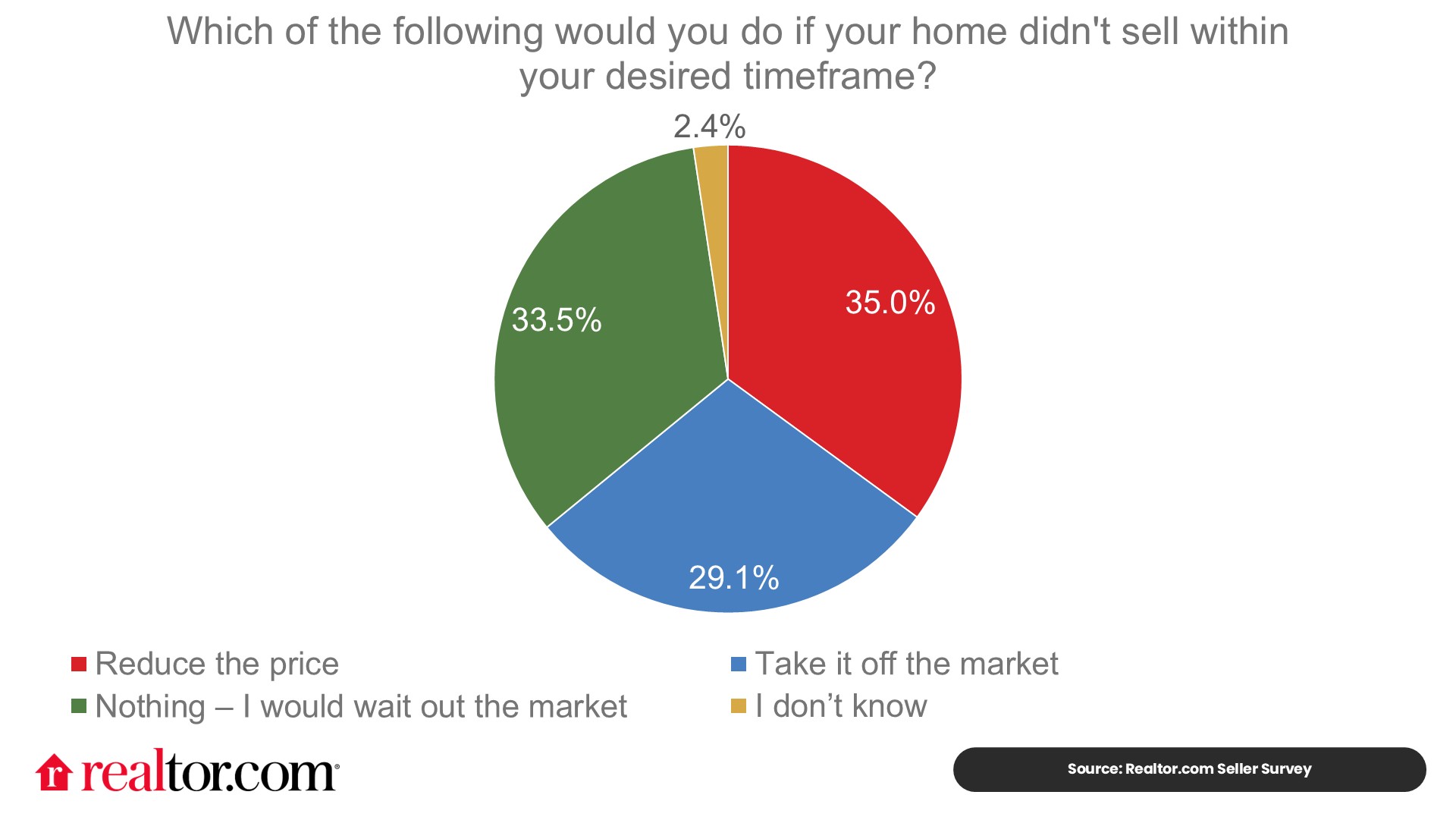
That last figure deserves attention. Last year saw a notable uptick in sellers withdrawing listings, a pattern enabled by the confluence of accumulated home equity, the mortgage rate lock-in effect, a slower market, and the absence of financial pressure to move. Whether that pattern repeats in 2026 will depend on how sellers respond to spring demand. Pricing in line with current market conditions remains the clearest path to a successful sale, and moderating national home prices suggest at least some sellers are making that adjustment.
Preparation separates confident sellers from the rest
Among the potential sellers surveyed, those who have taken more preparation steps tend to feel more confident about their outcome. Among potential sellers surveyed, 54% have researched prices in their neighborhood, 50% have made small fixes or cleaned and decluttered, and 44% have determined what home improvements to make before listing. The share contemplating improvements is down from 50% in 2025 and, with the increased share of sellers expecting to make price concessions, suggests that 2026 sellers may be focused on keeping costs low rather than competing on quality. Sellers have largely been considering their move for some time: 53% have been thinking about selling for one to three years.
Survey methodology
The Realtor.com® 2026 Best Time To Sell Seller Survey was conducted among a nationally representative sample of U.S. adults who reported that they are considering selling their home in the next 12 months. Data was collected March 16–23, 2026. Year-over-year comparisons reference the equivalent 2025 survey.
Disclaimer: The information provided on this website is for educational and informational purposes only and should not be considered financial, investment, or legal advice. Stock markets, real estate, and other financial instruments involve significant risks, and past performance does not guarantee future results. You should conduct your own research and/or seek advice from a licensed financial advisor before making any investment decisions. The website owner is not liable for any financial losses or damages arising from the use of the information presented here.
About The Author


